
California Music Teacher Magazine (Fall 2026)


California Music Teacher Magazine (Fall 2026)
Beyond the Private Lesson: A Reflection on Teaching, Learning, and Sharing Music
I still remember attending my first MTAC meeting in 2008. What stayed with me most was not one lecture or presentation, but the teachers themselves. Many of them had already taught for decades, yet they were still showing up, listening, asking questions, attending workshops, and looking for new ways to grow. I was surprised, and I was deeply moved. Until then, I had somehow assumed that experienced teachers already knew what they needed to know. That meeting quietly changed the way I understood teaching. It helped me see that a music teacher’s learning should never really stop.
Over time, I have come to believe that educational study is not only for classroom teachers. Anyone who teaches students carries an educational responsibility. Music teachers, especially, do much more than help students play the right notes. We stay with students over many years. We watch their confidence grow, their attitudes change, their emotions develop, and their sense of responsibility deepen.
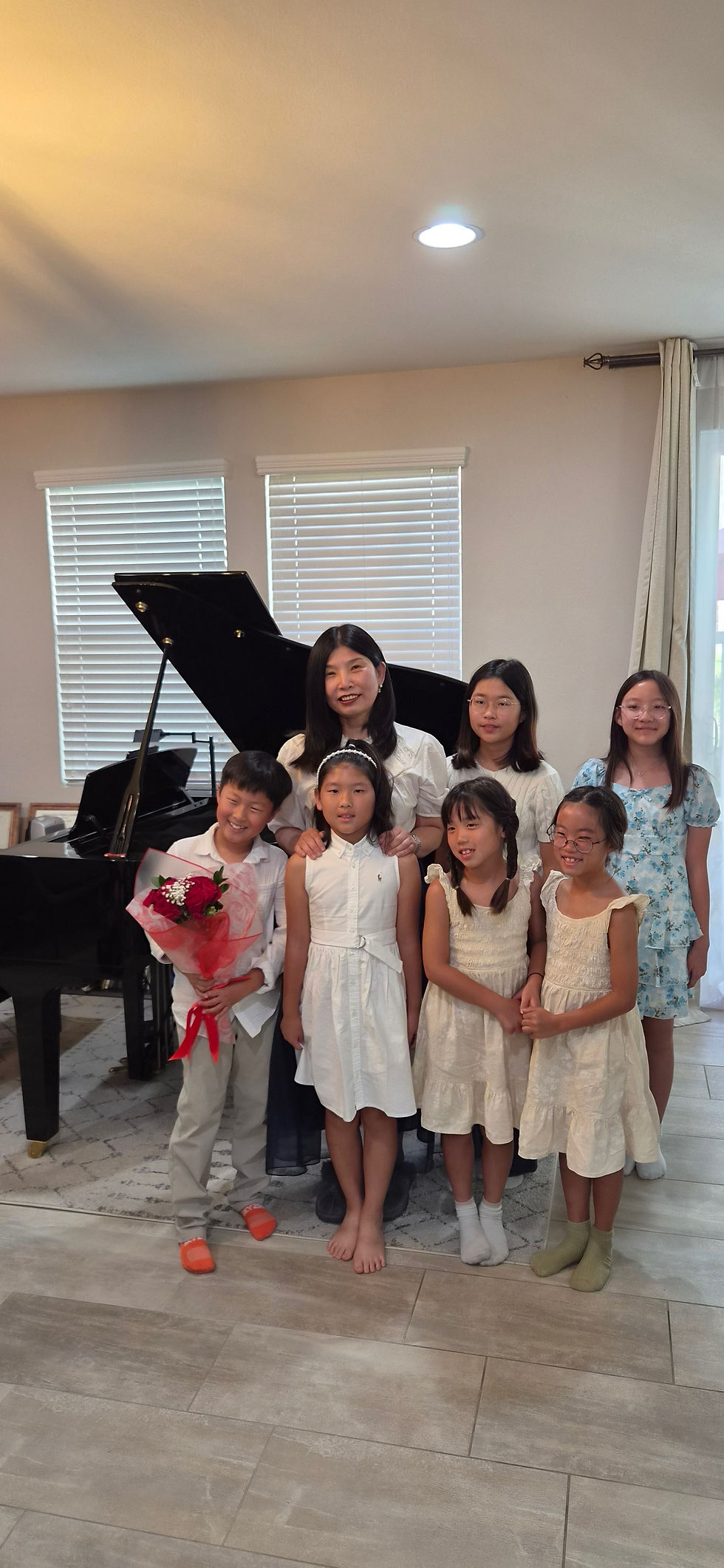
In some ways, it may not be wrong to say that a private piano teacher can sometimes see, teach, and guide a student for a longer period than many classroom teachers. In my own studio, most of my students have studied with me for nearly ten years. During those years, I often find myself becoming part of their lives. I see them through childhood, adolescence, school stress, exams, performances, college preparation, and sometimes even family joys and difficulties. A piano lesson is not simply a thirty-minute or one-hour appointment. It becomes a steady meeting place in the long process of a young person’s growth.
Because of that, I do not think the role of a private piano teacher is small. In lessons, students learn more than how to read notes or move their fingers. They learn how to try again after mistakes, how to practice with patience, how to listen to their own sound, how to stand on a stage, and how to express something through music. These are not small lessons. They become part of a student’s life.
At the same time, I also know that private piano teachers can easily fall into routine. I experienced this myself. When I taught similar method books, similar pieces, and similar explanations week after week, there were times when I felt as if I were running in the same circle. My students were learning, but I began to wonder whether I was giving them anything new, anything deeper, anything that truly inspired them. Experience is valuable, but when experience becomes only repetition, it can begin to feel more like habit than growth.
For schoolteachers, there are often systems that encourage continued study. Many are supported by their districts or schools. For some, graduate study may be connected to a salary scale, promotion, or professional requirement. That kind of professional development is meaningful. But independent music teachers live in a different situation. No district requires us to continue studying. No school supports our degree. No promotion system forces us to grow. For independent teachers, the desire to keep learning must come from within. Otherwise, it is easy to settle into familiar routines without even noticing it.
Another moment that stayed with me happened in 2018, when I attended my daughter’s graduate school commencement. During the ceremony, the dean recognized several special graduates. One was well over sixty years old. Another story was about a mother and daughter who had entered the same graduate program together and graduated together. I was deeply moved. I saw, right in front of me, that learning does not belong only to the young. It can begin again at many different stages of life. That day, I made a quiet promise to myself that someday I would return to the path of learning.
That promise became real later that same year. After my younger child entered college, I began to feel that perhaps it was time for me to study again, not for my children, not for my students, but for my own growth. I started looking for a piano professor who might be willing to teach me. I contacted several teachers, but it was not easy to receive a reply. Then one person responded: Dr. Victor Labenske at Point Loma Nazarene University.
That one reply meant more to me than he probably knew. It opened a door for me. After so many years of teaching students, I was going to become a student again.
Becoming a student again was not easy. Even though I had taught for many years, I felt nervous when I sat down for my own lesson. I also had opportunities to study alongside students younger than my own children. That experience humbled me. I worried about making mistakes. I listened carefully to every word my teacher said. I felt joy from even small improvements. I realized again what my own students feel every week.
But after each lesson, when I came down from the campus, the ocean at Point Loma looked especially beautiful. Sometimes I stopped to take a picture. It was not only because the ocean was beautiful. Those moments felt like quiet reminders that I was standing once again on the path of learning.
Dr. Labenske opened a new musical world for me. He did not simply teach me to play the notes on the page accurately. He encouraged me to think about intention, sound, expression, direction, and the heart behind a phrase. He would help me try the same passage in different ways and ask me to think about which sound carried the meaning of the music more clearly. Through that process, I began to listen again, think again, and feel music again.
During the seven years I have studied with him, I have experienced the joy of being a student again. With his encouragement, I performed with his students and studied pieces I had once wanted to learn in college but never had the chance to study. I also participated in an MTAC Convention Teachers’ Recital. That experience reminded me that I am still a musician who can learn, perform, and grow.
This changed my teaching. I began to ask my students more questions instead of simply telling them what to do. Why do you think this phrase should sound this way? What kind of feeling or image do you hear here? How can you listen to your own sound more carefully? Being a student again made me a more humble teacher. It helped me understand more deeply the nervousness, frustration, and small victories that students experience as they learn.
In 2023, I founded Amazing Grace Ensemble by bringing together students in my studio who were also learning second instruments. At first, my hope was simple. Piano students spend so much time practicing alone. I wanted them to experience making music with others, listening across parts, breathing together, and feeling how one person’s sound affects the whole group.
As I worked with the ensemble, I began to see kinds of learning that do not happen as easily in private lessons. Students learned to listen beyond their own part. They learned to hear melody and harmony, balance, and texture. They learned that if one person were not prepared, the whole group could be affected. They learned responsibility in a very practical way.
The ensemble naturally led to community performances. We visited senior centers, and my students saw that their music could bring comfort and joy to others. The smiles and warm applause from the senior community members encouraged them in a way that no exam score could. In those moments, students learned that music is not only for recitals, certificates, or competitions. Music is also something we share.
For the past twelve years, I have also organized benefit concerts supporting Global Children Foundation. What began as a student performance opportunity became something more meaningful over time. Students began to see that their music could be connected to helping others. When they prepare for a benefit concert, they are not only preparing to perform well. They are learning that their gifts can reach beyond themselves.
Through these experiences, I have learned that private piano teachers can teach much more than musical skills. We can teach responsibility, compassion, service, and community. Music education is not completed through recitals, exams, or competitions alone. When students experience that music can comfort, encourage, and help others, their musical learning takes on a deeper meaning.
These ensemble and benefit concert experiences also changed my understanding of my own role. I was no longer only teaching one student at one piano. I was connecting students to one another, creating spaces for them to perform together, and helping them share music with the community. I began to see that an independent music teacher does not have to remain only inside the lesson studio. We can create musical communities. We can help students experience collaboration, leadership, responsibility, and service.
Eventually, I felt ready for another challenge. This time, my goal was not only to grow as a pianist, but to grow more deeply as an educator. I began looking for online Master of Music Education programs because leaving San Diego was not realistic for me.
The application process was not easy. Some schools would not allow me to apply because I did not have a classroom teaching credential. Some rejected me quickly after reviewing my application. But I kept preparing. Eventually, I was accepted into the Master of Music Education program at Eastern Washington University.
My classes began in November 2025, and I am now taking my fifth graduate course while continuing my piano study with Dr. Labenske. Something unexpected has happened. My nearly thirty-five years of teaching experience has begun to meet the educational language I am learning in graduate school. Things I once understood only through experience are becoming clearer through pedagogical concepts.
In my graduate courses, I have been studying pedagogical approaches, motivation, self-regulated learning, active thinking, reflection, and ethical responsibility. These ideas have helped me look at my own teaching again. For example, I have thought more deeply about extrinsic and intrinsic motivation. Competitions, exams, certificates, recitals, and parental expectations can give students goals. They can be useful. But they cannot be the only reason students learn. The deeper love for music must grow from within.
Students begin to learn differently when they want to find a beautiful sound for themselves, return to a piece they once loved, or express something personal through music. That kind of motivation lasts longer. As teachers, we cannot force it, but we can help create the conditions for it to grow.
Writing formal responses in graduate school has also helped me. I have taught for many years, but writing about my teaching and connecting it with educational ideas has been a new kind of discipline. It has helped me see that many things I have done in lessons and rehearsals were not just personal habits. They had educational meaning. But it also reminded me that experience alone is not enough. Experience needs reflection.
Graduate school has reminded me that students need opportunities to think, not simply to follow instructions. This idea connects deeply with piano teaching. Students should not simply copy a teacher’s interpretation. They need opportunities to listen, compare, imagine, choose, and explain. I want my students to go beyond playing a piece correctly. I want them to ask why they play it that way, what kind of sound they want, and what the music means to them.
Graduate school has also opened my eyes to the lives of teachers in different communities. As I listened to schoolteachers from other regions, I became more aware of how stable the environment is for many of my own students. Most of them have parental support, private lessons, instruments at home, recitals, exams, and ensemble opportunities. But not every child has access to those experiences.
That realization made me think more seriously about my ethical responsibility as a music teacher. Music education should not remain only inside my own studio. It should also reach students who may have limited access to live classical music. So, I decided to visit schools in underserved communities and offer piano performances for students. Before graduate school, I might not have imagined doing this. But in May 2026, I began my first school visit performance. I do not know how large the impact of this small beginning will be, but for me it means that my learning is beginning to move outward, beyond myself and into the community.
I also think often about musical tradition. The reason we can still study and perform music written hundreds of years ago is that countless teachers passed it on, generation after generation. If no one had taught it, we would not be able to meet that music today. I believe music teachers today share that responsibility. We are part of a long line of people who receive music, care for it, and pass it forward.
I want to continue growing as a music educator. I want to keep the curiosity to learn new pieces and the passion to return to music I studied long ago. I do not want to become comfortable in routine or careless with the gift of teaching. I want sustained passion and faithful discipline to keep growing in my heart. For that reason, I try to value each day I am given.
I am now writing a new chapter in my life. I have taught piano for many years, but I am still learning. I still want to grow. And if what I learn can flow outward to my students and to the community, then continuing to study is not only for me. It becomes part of my responsibility as a music educator.
I believe true retirement does not begin when we grow older or stop working. It begins when we no longer want to learn. That is why I still choose to learn today, and why I hope what I learn will continue to be passed on through music—to my students, to my community, and to the next generation.
Comments